Lehigh University Athletics
Lehigh Rowing: An in-depth look
7/9/2014 12:28:00 PM | Men's Rowing, Women's Rowing
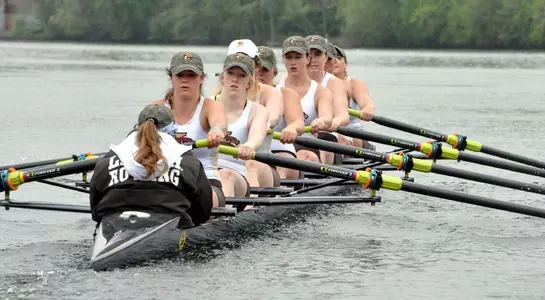
The Lehigh rowing program is on the rise. The Mountain Hawks have continued to improve every year since Brian Conley became head coach in August of 2010.
Rowing is a unique sport with the meshing of recruits and walk-ons to create a successful program. What is the Lehigh rowing program all about and where is it headed? Let's take a close look.
Head Coach Brian Conley's Philosophy
Conley came to Lehigh after four years as assistant coach at Dartmouth. He had an immediate goal to build a program. It's important to have a vision.
"I love building programs," said Conley. "Starting off, you need to have an idea of what you want to create. I eventually want to turn this into a Patriot League Champion and perennial NCAA Championship team."
Everything started from the ground up.
"We needed to start at the bare basics of rowing from learning the rowing stroke to what it means to be a collegiate athlete," said Conley. "We needed to teach a lot about rowing. We always revert back to the basics of what we're trying to accomplish.

Patience is important. Dramatic changes won't happen overnight.
"We want to create an environment where athletes feel comfortable competing each day," Conley continued. "We want the athletes to feel they can push really hard and not worry that they will alienate other athletes, but instead that their improvement and drive will encourage their teammates to be the best they can. We try to create an environment where our student-athletes feel comfortable competing against each other for seats and in intrasquad competition. We take those steps, set the standards and goals then build to those standards. Every year, we try to raise the bar a little bit more."
An important aspect of Conley's philosophy is taking care of business in all areas, whether in the classroom, on the water or in one's social life. Focusing off the water will help performance on the water.
"We teach the idea that when it's time to practice, it's time to practice," said Conley. "Outside of practice is the time to handle the other things: academics, personal life issues, etc. We make sure the office is open so every athlete feels comfortable approaching any of the coaches to do those types of things. There will always be times when different aspects of life cross, but we're trying to teach the basic skills they'll need later in life."
Recruits
Conley's philosophy in recruiting is somewhat atypical. Rather than solely looking at numbers - things like height and erg scores - Conley puts a large focus on intangibles.
"We use four key components in developing our recruiting class," he said. "One is that they love Lehigh, which ultimately leads to success on the water. The second thing we look for is a four-year rowing commitment to the program. The third is attitude and work ethic. The fourth thing is athletic ability.
"If they have those four things, we know the sky's the limit in terms of what they can accomplish," Conley continued. "If they have those four things, it tells us they're incredibly dedicated, they're incredibly hard workers, they're willing to make sure they're on top of everything and they understand priorities."
Conley is straight forward regarding the role of the recruits and the fact that they'll be rowing with inexperienced athletes.
"I tell recruits that we're building a team, we're not just building you as an individual," said Conley. "We'll be doing both, but in order for you to be successful, you have to rely on eight other people in your boat. It has to start with the bare basics."
Conley looks to those recruited, experienced rowers to be leaders.
"We're looking for you to be a leader amongst those who have no idea what they're doing and help teach them the ideas that we're trying to incorporate into the team," he said. "You work closely with the coaches and you work closely with the walk-ons, which bolsters a full team dynamic. We've seen a lot of success on the freshmen level so we're now moving that up into the varsity ranks. When you move up into the varsity ranks, it plays the same role."

Walk-Ons
A program couldn't truly reach its full potential without depth in its personnel. Most of Lehigh's walk-ons don't have any rowing experience. Some do, but most are starting from scratch. The Mountain Hawks pull directly from the student body population.
With no previous rowing experience, Conley measures potential through hard work.
"We don't have the luxury of picking and choosing height and weight, but we have the luxury of picking and choosing those who really like to work hard," he said. "In our tryouts for walk-ons, we do a wide range of activities. We're teaching the rowing stroke, but we're also incorporating other aspects where walk-ons feel they can compete as well. There's a lot of running, there's a lot of body circuits, and there are different things where the recruited athletes will be on equal footing with the walk-ons in terms of competition. A great work ethic is where we start to pick and choose our walk-ons."
Every so often, Conley may get one or two walk-ons who have rowed in high school and want to continue in college, but the majority has no experience with the sport.
What type of people end up joining the Lehigh rowing program as walk-ons?
"There is a decent size portion that either played one sport their entire lives, or they've never played a sport but have been active in their lifestyle," said Conley. "Those are the ones who usually take off, the multi-sport athletes who don't have their sport in college so they're looking for a sport in which to compete."
Conley never wants his athletes to feel compelled to do something or to row if they aren't truly enjoying themselves.
"Oftentimes, either the walk-ons pick things up really quickly, or they struggle. That's where we try to step in and help them along to figure out whether or not the sport is really for them," he said. "It's definitely a sport that you either love or you hate.
"When it comes down to those athletes, if they're struggling, we ask 'do you absolutely love the sport?' If the answer is yes, great, let's figure this out for you. No? We might need to find something else for you."
No Experience Preferred
Whether it's a sport, in your job or any aspects of daily life, bad habits can develop. The same is true in rowing.
"We've had signs up across campus that have said no 'experience preferred' and that's simply because you have no bad habits when you walk in," said Conley. "You have no experience with the rowing stroke. There are a lot of technical aspects of a rowing stroke and we can teach you how to do things the right way, the Lehigh way."

This is fairly unique to rowing. In some ways, it may even be better to not have previous experience. Imagine someone who has never played basketball walking on to a college team.
"A lot of recruited athletes struggle with the muscle memory because of the habits they've created then trying to change the rowing stroke," said Conley. "I think it's equal across any team that you're competing against; they're going to have the same dynamic of teaching their recruits a whole new rowing stroke which might not equal what they did in high school.
"That's okay. But the ultimate goal in rowing is doing the same exact thing at the same exact time. That's what we teach. If you're a walk-on who has no experience, we can literally teach this to you from scratch and you never really have 'bad habits' from previous experience."
Meshing Of Walk-Ons With Recruits
Recruits and walk-ons coming together as an integrated whole is incredibly important for the success of Lehigh, and any rowing program.
"For us to build Lehigh rowing into a perennial NCAA Championship contender, you need depth," said Conley. "In order to have depth, you need a large amount of walk-ons, inclusive of your large classes of recruited athletes. If you don't have the gelling that happens amongst those two groups, you'll never reach the Patriot League Championship and you'll never ever reach the NCAA Championship.
"We're trying to build something that's going to be long-lasting," he continued. "So when the seniors graduate, they feel like they've left a legacy. The next seniors can build upon that legacy, leave their own legacy and make the team better and better every year."
One unique way to mesh the recruits and walk-ons is taking a bus to practice. Rowing is atypical in that sense with most schools having to travel to practice. Having to ride together for 20 minutes to practice could be taken as a bad thing and a burden, but many positives come out of the situation.
"I like the bus because it adds to the team dynamic, being forced to bond with people you might not have ever talked to before," said Conley. "Athletes mixing with people who have never done a sport before and trying to learn the sport quickly. You have this dynamic on the bus, and it's usually the younger athletes, which is great, because that helps build retention. Because of the bus, they actually know each other a whole lot better as opposed to just driving themselves to practice and segregating a little bit."
The importance of walk-ons meshing with recruits comes back to depth. Through something like taking the bus, it helps integrate the Mountain Hawks into a team rather than a collection of walk-ons and recruits.
"It was clear on my first day, we had a lot of work to do," said Conley. "We only had nine women and 10 men in the entire rowing program. We went out and started recruiting walk-ons and this past year, we had 24 women and 30 men in the program.

"Once we get to the point where we have five 'eights' worth of athletes on each gender squad who love Lehigh, are committed to the program for four years, want to pull really hard and have a positive attitude, this is when our program will really take off. That's what we're building towards."
No Offseason
Like in most sports, championships are truly won and lost in the offseason. Rowing is no different. Although rowing doesn't have a true "offseason," the sport's championship season is in the spring. The fall and winter all build towards that spring season and especially the end-of-season championship races like the Dad Vail Regatta and Patriot League Championships.
"Our season is really long. We go literally from day one of classes all the way until after classes end in the spring," said Conley. "Being able to break up our season helps considerably, but I think having a sport all year gives a little bit of structure to your daily day, which is good."
Every part of the year is different.
"The fall season is a little bit more relaxed because we do a lot of teaching," said Conley. "We're in full swing, but not as intense. Once we get into the winter season, it's fewer hours, but the intensity increases. The athletes can focus in on the academics off the water, but they still have practices to attend. Fewer days of practice and fewer hours, but they work hard during those times."
The winter is all about strength and conditioning by becoming as fit as possible.
"We do a lot of cross training and a lot of erging because that's our sport," said Conley. "We have to train the muscles that we use five days a week during November, December and January. Once we're in the spring season, it's in full swing where we add lifting into the whole mix as well. A lot happens during winter training just to get ourselves into incredibly fit conditions."
Hard work and success during the winter goes a long way towards the spring.
"The best-conditioned teams are the ones who win," said Conley. "We really have to focus in during the winter. Once the spring rolls around, we're in full gear. We teach the team to be on top of their academics early on in the spring because you're going to be racing almost every weekend once racing season starts.
"The hallmark of rowing is that your spring season is won or lost during the winter training. The winter is a really crucial time period for us, to get things narrowed down so that we can be fast in the spring."
Conley identifies improvement in two different ways, individual improvement and team improvement.
"We do a lot of testing with the erg machine and lifting," he said. "We rank everybody up and down and we keep records. A lot of our records have been dropping like crazy. If the individuals are getting faster, that means the team should be getting faster, too.
"In terms of measuring team improvement, we do a lot of averaging of those collective individual test scores," Conley continued. "We also look at results of racing compared to where we were against the same crews last year. There's always the end of season as well and finishing better than we did the year before. We've improved dramatically every single year, which has been awesome."
Other Key Philosophies
Another key philosophy for Conley is trust and honesty.
"The one thing that I always promise every single one of my athletes is that they'll get complete and total honesty from me in terms of where they stand on the team, which goes a long way in building trust," he said.
The Mountain Hawks come up with a new motto every year depending on the team's identity.
"We've had a motto, 'one team, one drive.' It always revolves around what the athletes want and think is going to be the most motivating factor for them," said Conley. "I think an overall focus of ours is that we will always push through the middle 1,000 meters of the race."
With races being 2,000 meters, some teams put an emphasis on the start or finish. Conley's philosophy is different.
"If you can break a crew mentally in the middle 1,000 meters, in particular the third 500 which is usually where crews struggle the most, you'll win the majority of your races based on being stronger in the middle 1,000 and being mentally tougher," he said.
A Bright Future
The Lehigh rowing program is in a good position. The pieces are in place to continue the upward trend that has developed.
One of the most rewarding aspects for Conley is the support he and his program receives.
"Since I arrived here, we've received everything we've needed to make ourselves better," he said. "The administration has been incredible in terms of supporting the goals that we have for the program. The alumni are ecstatic about where the program is going and they have poured on a lot of support. We've bought new equipment and we've improved our endowments for our program. We've really kept a long-term vision for the program which helps everybody get on board."
One of the team's biggest (and lone) struggles is time management at a prestigious academic school like Lehigh.
"We wish we had more time to be able to balance academics and athletics," said Conley. "It is an incredibly difficult task, but the best teams in our league and in the country are at prestigious academic institutions and are able to manage academics and athletics every day at the highest level, so we have to do the same. If our biggest struggle is maintaining that balancing act, I think that's pretty good."
At Lehigh, there's a focus on the why. Coaches don't just tell student-athletes to do something, but they also try to explain why it's important in the grand scheme of things.

"We teach you the rowing stroke, we teach you the physics behind it and why it's important to do certain motions," said Conley. "We really try to communicate the why in what we do. That way, the athletes buy in more. Also, they can then teach the stroke to their fellow teammates and be aware of what's going wrong or what's going right and be able to make those adjustments because they understand the why."
Conley knows the program's future is bright especially because of one thing, the student-athletes.
"If the athletes are excited and the athletes are working hard, that tells me there's a bright future," he said.
"The program should be built around the athletes and making sure they are feeling like they're accomplishing something. It's a struggle for an athlete to constantly improve. Our athletes know that each day won't necessarily be their best performance, but as long as it was their best honest effort, improvement will happen.
"The best motivator for any athlete is improvement, seeing that improvement and feeling the improvement," Conley continued. "If they improve through honest effort, then there's a bright future all the way down the line and it can only get brighter."
Rowing is a unique sport with the meshing of recruits and walk-ons to create a successful program. What is the Lehigh rowing program all about and where is it headed? Let's take a close look.
Head Coach Brian Conley's Philosophy
Conley came to Lehigh after four years as assistant coach at Dartmouth. He had an immediate goal to build a program. It's important to have a vision.
"I love building programs," said Conley. "Starting off, you need to have an idea of what you want to create. I eventually want to turn this into a Patriot League Champion and perennial NCAA Championship team."
Everything started from the ground up.
"We needed to start at the bare basics of rowing from learning the rowing stroke to what it means to be a collegiate athlete," said Conley. "We needed to teach a lot about rowing. We always revert back to the basics of what we're trying to accomplish.
Patience is important. Dramatic changes won't happen overnight.
"We want to create an environment where athletes feel comfortable competing each day," Conley continued. "We want the athletes to feel they can push really hard and not worry that they will alienate other athletes, but instead that their improvement and drive will encourage their teammates to be the best they can. We try to create an environment where our student-athletes feel comfortable competing against each other for seats and in intrasquad competition. We take those steps, set the standards and goals then build to those standards. Every year, we try to raise the bar a little bit more."
An important aspect of Conley's philosophy is taking care of business in all areas, whether in the classroom, on the water or in one's social life. Focusing off the water will help performance on the water.
"We teach the idea that when it's time to practice, it's time to practice," said Conley. "Outside of practice is the time to handle the other things: academics, personal life issues, etc. We make sure the office is open so every athlete feels comfortable approaching any of the coaches to do those types of things. There will always be times when different aspects of life cross, but we're trying to teach the basic skills they'll need later in life."
Recruits
Conley's philosophy in recruiting is somewhat atypical. Rather than solely looking at numbers - things like height and erg scores - Conley puts a large focus on intangibles.
"We use four key components in developing our recruiting class," he said. "One is that they love Lehigh, which ultimately leads to success on the water. The second thing we look for is a four-year rowing commitment to the program. The third is attitude and work ethic. The fourth thing is athletic ability.
"If they have those four things, we know the sky's the limit in terms of what they can accomplish," Conley continued. "If they have those four things, it tells us they're incredibly dedicated, they're incredibly hard workers, they're willing to make sure they're on top of everything and they understand priorities."
Conley is straight forward regarding the role of the recruits and the fact that they'll be rowing with inexperienced athletes.
"I tell recruits that we're building a team, we're not just building you as an individual," said Conley. "We'll be doing both, but in order for you to be successful, you have to rely on eight other people in your boat. It has to start with the bare basics."
Conley looks to those recruited, experienced rowers to be leaders.
"We're looking for you to be a leader amongst those who have no idea what they're doing and help teach them the ideas that we're trying to incorporate into the team," he said. "You work closely with the coaches and you work closely with the walk-ons, which bolsters a full team dynamic. We've seen a lot of success on the freshmen level so we're now moving that up into the varsity ranks. When you move up into the varsity ranks, it plays the same role."
Walk-Ons
A program couldn't truly reach its full potential without depth in its personnel. Most of Lehigh's walk-ons don't have any rowing experience. Some do, but most are starting from scratch. The Mountain Hawks pull directly from the student body population.
With no previous rowing experience, Conley measures potential through hard work.
"We don't have the luxury of picking and choosing height and weight, but we have the luxury of picking and choosing those who really like to work hard," he said. "In our tryouts for walk-ons, we do a wide range of activities. We're teaching the rowing stroke, but we're also incorporating other aspects where walk-ons feel they can compete as well. There's a lot of running, there's a lot of body circuits, and there are different things where the recruited athletes will be on equal footing with the walk-ons in terms of competition. A great work ethic is where we start to pick and choose our walk-ons."
Every so often, Conley may get one or two walk-ons who have rowed in high school and want to continue in college, but the majority has no experience with the sport.
What type of people end up joining the Lehigh rowing program as walk-ons?
"There is a decent size portion that either played one sport their entire lives, or they've never played a sport but have been active in their lifestyle," said Conley. "Those are the ones who usually take off, the multi-sport athletes who don't have their sport in college so they're looking for a sport in which to compete."
Conley never wants his athletes to feel compelled to do something or to row if they aren't truly enjoying themselves.
"Oftentimes, either the walk-ons pick things up really quickly, or they struggle. That's where we try to step in and help them along to figure out whether or not the sport is really for them," he said. "It's definitely a sport that you either love or you hate.
"When it comes down to those athletes, if they're struggling, we ask 'do you absolutely love the sport?' If the answer is yes, great, let's figure this out for you. No? We might need to find something else for you."
No Experience Preferred
Whether it's a sport, in your job or any aspects of daily life, bad habits can develop. The same is true in rowing.
"We've had signs up across campus that have said no 'experience preferred' and that's simply because you have no bad habits when you walk in," said Conley. "You have no experience with the rowing stroke. There are a lot of technical aspects of a rowing stroke and we can teach you how to do things the right way, the Lehigh way."
This is fairly unique to rowing. In some ways, it may even be better to not have previous experience. Imagine someone who has never played basketball walking on to a college team.
"A lot of recruited athletes struggle with the muscle memory because of the habits they've created then trying to change the rowing stroke," said Conley. "I think it's equal across any team that you're competing against; they're going to have the same dynamic of teaching their recruits a whole new rowing stroke which might not equal what they did in high school.
"That's okay. But the ultimate goal in rowing is doing the same exact thing at the same exact time. That's what we teach. If you're a walk-on who has no experience, we can literally teach this to you from scratch and you never really have 'bad habits' from previous experience."
Meshing Of Walk-Ons With Recruits
Recruits and walk-ons coming together as an integrated whole is incredibly important for the success of Lehigh, and any rowing program.
"For us to build Lehigh rowing into a perennial NCAA Championship contender, you need depth," said Conley. "In order to have depth, you need a large amount of walk-ons, inclusive of your large classes of recruited athletes. If you don't have the gelling that happens amongst those two groups, you'll never reach the Patriot League Championship and you'll never ever reach the NCAA Championship.
"We're trying to build something that's going to be long-lasting," he continued. "So when the seniors graduate, they feel like they've left a legacy. The next seniors can build upon that legacy, leave their own legacy and make the team better and better every year."
One unique way to mesh the recruits and walk-ons is taking a bus to practice. Rowing is atypical in that sense with most schools having to travel to practice. Having to ride together for 20 minutes to practice could be taken as a bad thing and a burden, but many positives come out of the situation.
"I like the bus because it adds to the team dynamic, being forced to bond with people you might not have ever talked to before," said Conley. "Athletes mixing with people who have never done a sport before and trying to learn the sport quickly. You have this dynamic on the bus, and it's usually the younger athletes, which is great, because that helps build retention. Because of the bus, they actually know each other a whole lot better as opposed to just driving themselves to practice and segregating a little bit."
The importance of walk-ons meshing with recruits comes back to depth. Through something like taking the bus, it helps integrate the Mountain Hawks into a team rather than a collection of walk-ons and recruits.
"It was clear on my first day, we had a lot of work to do," said Conley. "We only had nine women and 10 men in the entire rowing program. We went out and started recruiting walk-ons and this past year, we had 24 women and 30 men in the program.
"Once we get to the point where we have five 'eights' worth of athletes on each gender squad who love Lehigh, are committed to the program for four years, want to pull really hard and have a positive attitude, this is when our program will really take off. That's what we're building towards."
No Offseason
Like in most sports, championships are truly won and lost in the offseason. Rowing is no different. Although rowing doesn't have a true "offseason," the sport's championship season is in the spring. The fall and winter all build towards that spring season and especially the end-of-season championship races like the Dad Vail Regatta and Patriot League Championships.
"Our season is really long. We go literally from day one of classes all the way until after classes end in the spring," said Conley. "Being able to break up our season helps considerably, but I think having a sport all year gives a little bit of structure to your daily day, which is good."
Every part of the year is different.
"The fall season is a little bit more relaxed because we do a lot of teaching," said Conley. "We're in full swing, but not as intense. Once we get into the winter season, it's fewer hours, but the intensity increases. The athletes can focus in on the academics off the water, but they still have practices to attend. Fewer days of practice and fewer hours, but they work hard during those times."
The winter is all about strength and conditioning by becoming as fit as possible.
"We do a lot of cross training and a lot of erging because that's our sport," said Conley. "We have to train the muscles that we use five days a week during November, December and January. Once we're in the spring season, it's in full swing where we add lifting into the whole mix as well. A lot happens during winter training just to get ourselves into incredibly fit conditions."
Hard work and success during the winter goes a long way towards the spring.
"The best-conditioned teams are the ones who win," said Conley. "We really have to focus in during the winter. Once the spring rolls around, we're in full gear. We teach the team to be on top of their academics early on in the spring because you're going to be racing almost every weekend once racing season starts.
"The hallmark of rowing is that your spring season is won or lost during the winter training. The winter is a really crucial time period for us, to get things narrowed down so that we can be fast in the spring."
Conley identifies improvement in two different ways, individual improvement and team improvement.
"We do a lot of testing with the erg machine and lifting," he said. "We rank everybody up and down and we keep records. A lot of our records have been dropping like crazy. If the individuals are getting faster, that means the team should be getting faster, too.
"In terms of measuring team improvement, we do a lot of averaging of those collective individual test scores," Conley continued. "We also look at results of racing compared to where we were against the same crews last year. There's always the end of season as well and finishing better than we did the year before. We've improved dramatically every single year, which has been awesome."
Other Key Philosophies
Another key philosophy for Conley is trust and honesty.
"The one thing that I always promise every single one of my athletes is that they'll get complete and total honesty from me in terms of where they stand on the team, which goes a long way in building trust," he said.
The Mountain Hawks come up with a new motto every year depending on the team's identity.
"We've had a motto, 'one team, one drive.' It always revolves around what the athletes want and think is going to be the most motivating factor for them," said Conley. "I think an overall focus of ours is that we will always push through the middle 1,000 meters of the race."
With races being 2,000 meters, some teams put an emphasis on the start or finish. Conley's philosophy is different.
"If you can break a crew mentally in the middle 1,000 meters, in particular the third 500 which is usually where crews struggle the most, you'll win the majority of your races based on being stronger in the middle 1,000 and being mentally tougher," he said.
A Bright Future
The Lehigh rowing program is in a good position. The pieces are in place to continue the upward trend that has developed.
One of the most rewarding aspects for Conley is the support he and his program receives.
"Since I arrived here, we've received everything we've needed to make ourselves better," he said. "The administration has been incredible in terms of supporting the goals that we have for the program. The alumni are ecstatic about where the program is going and they have poured on a lot of support. We've bought new equipment and we've improved our endowments for our program. We've really kept a long-term vision for the program which helps everybody get on board."
One of the team's biggest (and lone) struggles is time management at a prestigious academic school like Lehigh.
"We wish we had more time to be able to balance academics and athletics," said Conley. "It is an incredibly difficult task, but the best teams in our league and in the country are at prestigious academic institutions and are able to manage academics and athletics every day at the highest level, so we have to do the same. If our biggest struggle is maintaining that balancing act, I think that's pretty good."
At Lehigh, there's a focus on the why. Coaches don't just tell student-athletes to do something, but they also try to explain why it's important in the grand scheme of things.
"We teach you the rowing stroke, we teach you the physics behind it and why it's important to do certain motions," said Conley. "We really try to communicate the why in what we do. That way, the athletes buy in more. Also, they can then teach the stroke to their fellow teammates and be aware of what's going wrong or what's going right and be able to make those adjustments because they understand the why."
Conley knows the program's future is bright especially because of one thing, the student-athletes.
"If the athletes are excited and the athletes are working hard, that tells me there's a bright future," he said.
"The program should be built around the athletes and making sure they are feeling like they're accomplishing something. It's a struggle for an athlete to constantly improve. Our athletes know that each day won't necessarily be their best performance, but as long as it was their best honest effort, improvement will happen.
"The best motivator for any athlete is improvement, seeing that improvement and feeling the improvement," Conley continued. "If they improve through honest effort, then there's a bright future all the way down the line and it can only get brighter."
Friday, April 10
Friday, March 27
Friday, March 28
Wednesday, April 24